








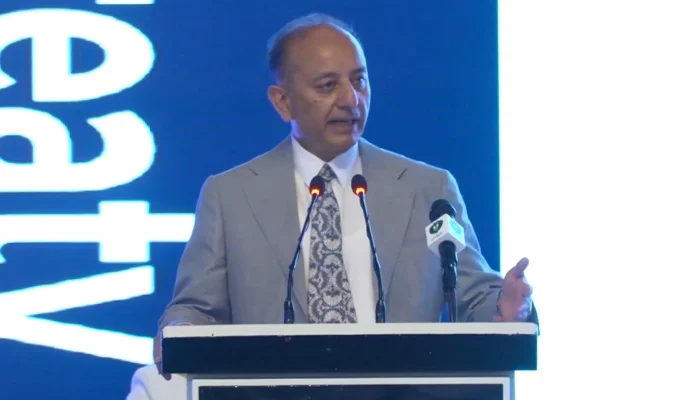
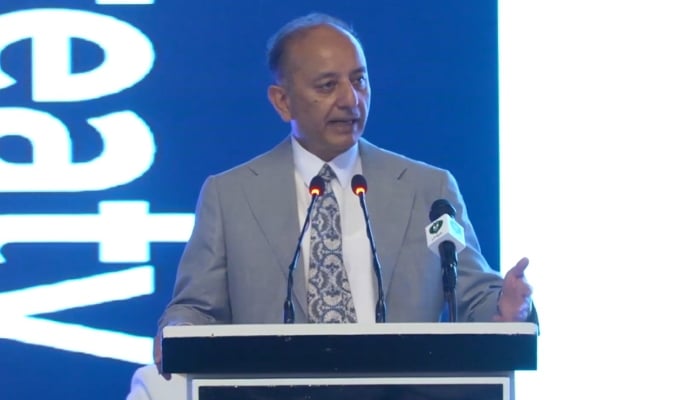
Minister for Climate Change Musadik Malik delivered an impassioned address this week, framing the unravelling of the Indus Waters Treaty as a defining test case for water rights of downstream nations worldwide.
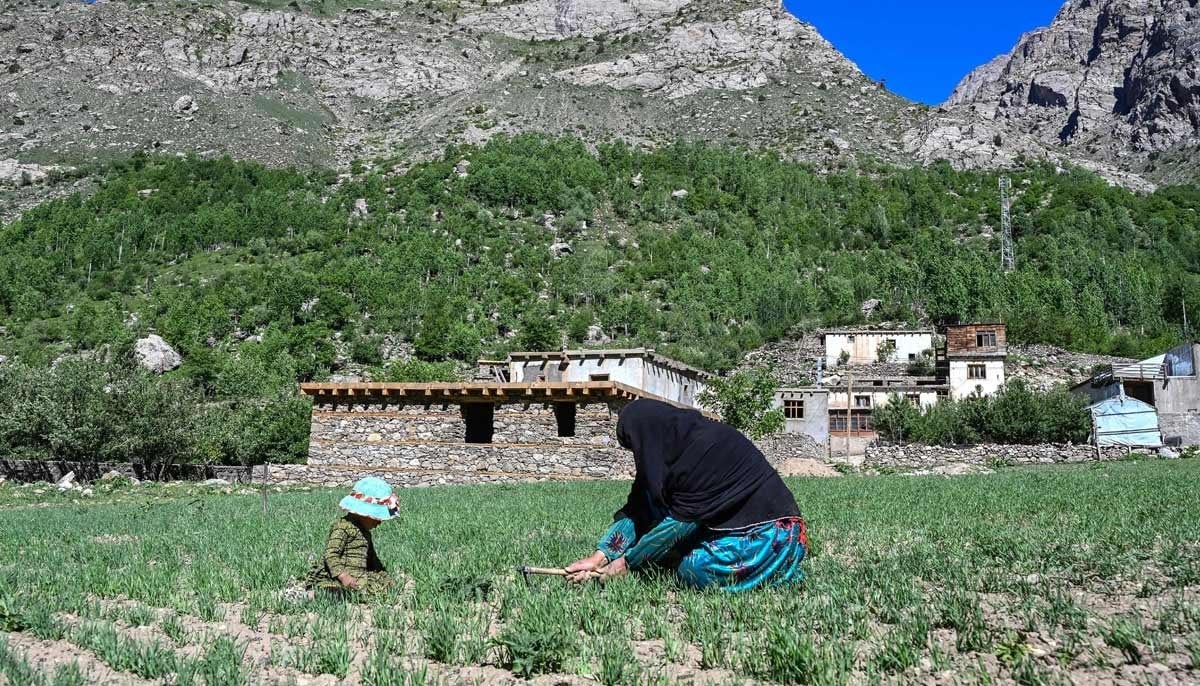
Malik opened with the story of Iqbal Solangi, a Pakistani farmer whose family had worked the land for seven or eight generations before being wiped out by repeated flooding, first in 2010, then again in 2012, and once more in 2022. Solangi ultimately abandoned farming altogether and now works as a labourer in Karachi.
“Generations of farming lost to water,” Malik said, adding that Solangi’s story was far from unique. He pointed to farmers in Bangladesh who depend on water flows for fishing and agriculture, and to a woman in the Sahel who walks roughly four miles each day for a single bucket of water after a nearby river receded, a consequence, he said, of upstream diversion.
“This is not a crisis in her life,” Malik said. “This is her life.”
Malik argued that the common thread linking Pakistan’s floods and droughts to similar crises along the Nile, the Tigris, the Mekong, and the former Aral Sea is not scarcity or excess of water itself, but the loss of control over it.
“The danger is not just too little water or too much water,” he said. “The danger is that someone else who is not you controls the tap through which your water is going to flow.”
Citing data, Malik said flows at the Marala barrage had swung from 1,500 cusecs to 78,000 cusecs and back to 1,500 cusecs with no rainfall to account for the change. This was evidence, he argued, of upstream manipulation.
He noted that roughly half of Pakistan’s population, about 120 million people, depends on agriculture, which accounts for roughly a quarter of the country’s GDP and effectively all of its food security.
The minister also linked the dispute to climate change, noting that the country he holds responsible for controlling the water flow is also the world’s third-largest greenhouse gas emitter, tying its emissions to glacier melt and downstream flooding in Pakistan.
He cited a toll of 6,000 deaths, 19,000 injuries or disabilities, and 40 million people displaced over the past 15 years due to flooding, along with an estimated 1.8 billion lost school days tied to prolonged displacement.
Malik rejected the characterisation that the Indus Waters Treaty, which has endured three wars between the two nuclear-armed neighbours, has been merely suspended or held in abeyance.
“It is simply that the treaty has been revealed,” he said, “and that’s all there is to it.”
He noted that Pakistan had taken the matter to international arbitration, which he said had issued a ruling placing limits on unilateral technical design changes to water infrastructure. He criticised the other party’s refusal to accept the court’s jurisdiction, calling it a dangerous precedent.
“Does it mean tomorrow anyone can get up, any nuclear state can get up and say… I don’t accept the world order, I don’t accept treaties, I don’t accept rights, I don’t accept justice?” he asked.
Malik broadened his argument into a global appeal, arguing that if the precedent holds, no downstream country retains water rights, pointing to the Rhine as it flows into the Netherlands, the Danube’s 19 riparian states, the Tisza, and the Nile as comparable cases.
“This is not Pakistan’s case,” he said. “This is the case and test for water rights for all downstream billions […] who live downstream.”
He called for the international community to move beyond non-binding declarations and establish a binding covenant on water governance, comparable to existing frameworks for trade and nuclear non-proliferation.
“There must be a covenant which has political consequences, which has economic consequences, which has diplomatic consequences,” Malik said. “So rise now or hold your peace forever.”